

AMD’s AM4 platform remains highly relevant in the eyes of gamers, streamers, and productivity users even in 2025. For those looking to buy or upgrade a PC, the AM4 socket is flexible and cost-effective due to the variety of processors available, ranging from low-cost to high-end. Whether you’re striving for high fps in the most demanding games or editing 4K video on Premiere Pro, I will help you find the best AM4 CPUs for gaming and productivity, without overspending on newer platforms. Let’s explore why AM4 remains a smart choice—and which CPUs stand out the most today.
You might expect an old motherboard socket like AM4 to slip into retirement now that next-gen chips, DDR5 RAM, and blazing-fast PCIe 5 ports are everywhere. That idea, though, barely scratches the surface of reality. Halfway through 2025, the AM4 remains a top pick for gamers, streamers, and everyday computer users, and it is available on shelves at prices that won’t strain a budget. Years of solid drivers, reliable BIOS updates, and a massive pile of compatible parts have turned the platform into a simple, trustworthy workhorse instead of an afterthought.
AM4 keeps showing up in build guides mainly because great processors for it just won’t disappear. While many older platforms are forgotten as soon as the next socket drops, AMD chose to run a different playbook by keeping the AM4 platform alive and easy to access. Chips like the Ryzen 5 5600X vs 5700X and the beefy ryzen 7 5800x3d performance are readily stocked almost everywhere, from big online stores to smaller local shops. Because AMD still manufactures these parts and because many people upgrade or swap hardware, you can also easily acquire them on the second-hand market.
On top of that, AMD rolled out budget refreshes like the Ryzen 5 5600GT and 5500GT at the end of 2023 and early 2024, giving wallet-friendly runners that smoke similar-priced Intel options. Whether you browse an e-commerce giant or pop into a nearby computer store, AM4 chips often sit on the shelf while shiny new AM5 parts with tight supply and sky-high prices leave builders high and dry.
AM4 holds the crown for best budget am4 cpu builds in 2025, and that doesn’t look set to change soon. Years of gradual upgrades have knocked prices on motherboards, coolers, and DDR4 memory down to comfortable levels, so putting together a competent rig no longer feels like a mortgage application. While newcomers still pay a premium for DDR5 and cutting-edge sockets, an AM4 setup gives power users room to make a generous living-room-level machine without emptying the wallet. Pairing a Ryzen 5 5600X with a B550 board and 16 GB of DDR4 RAM allows gamers, video editors, and heavy multitaskers to work through projects smoothly, demonstrating that the platform consistently offers value for every dollar.
The real magic of AM4 shows up in price-to-frame averages so good they almost look doctored. Build a lean gaming box, a quiet office rig, or a showy streaming setup, and the same family of chips stretches to fit. Top am4 cpus still live in the ryzen 7 5800x3d performance, turning 1440-pixel screens into slide shows, yet a Ryzen 5 5500 gives entry level multitaskers nearly all-corner speed for pennies. That sweet range means most builders can stick with proven tech for a little longer, resisting the push to DDR5 and fresh sockets until prices calm and real gains appear.
Another key reason AM4 continues to thrive is its remarkable longevity. Launched back in 2017, the AM4 socket has welcomed multiple CPU families —Zen, Zen 2, and Zen 3—and done so seamlessly. That backward-and-forward compatibility has no rival among mainstream sockets, giving users a rare sense of investment protection. With only modest motherboard models, anyone can upgrade from an early Ryzen 3 to a powerful Ryzen 7 5800X3D without needing new board hardware.
Board makers have stepped in, promising BIOS updates that will run through 2024 and possibly even 2025, allowing older B450 and X470 units to run the latest Zen 3 chips with minimal fuss. As a result, individuals with longer-term builds can enhance performance without tearing down and rebuilding the entire rig. By comparison, upgrading to AMD’s newer AM5 or Intel’s LGA1700 route usually means new motherboards, DDR5 memory, and beefier cooling, all of which add extra expense to the upgrade bill.
In addition to hardware longevity, maturing drivers, solid firmware, and ongoing software tuning now deliver rock-steady stability on AM4 systems, quiet in a way that early adopters of new sockets rarely experience.
The AM4 socket has aged surprisingly well, acting more like lovingly curated wine than obsolete hardware, and its collection of strong, budget-friendly CPUs still holds up in 2025. Whether you’re gaming, streaming (yes, even for the best am4 cpu for streaming), editing (looking for the best am4 cpu for video editing), or just juggling multiple tabs, there’s an AM4 chip ready to slide neatly into your build and keep costs sensible. AMD’s nearly ten years of steady support turned the platform into a polished, hassle-free playground packed with diverse processors. Even so, not every AM4 chip offers the same bang for your buck or cooling requirements. Based on real benchmarks, am4 processor comparison, price-to-performance value, gaming FPS, thermal headroom, and heavy multitasking, here’s a straightforward ranking of the five high performance am4 cpu options to consider in 2025—ensuring you choose the best am4 processor for your exact needs.
| Rank | CPU | Cores / Threads | Base / Boost Clock | L3 Cache | TDP | Ideal Use | |
|---|---|---|---|---|---|---|---|
| 1️⃣ | Ryzen 7 5800X3D | 8 / 16 | 3.4 / 4.5 GHz | 96MB | 105W | High-end Gaming, Streaming | |
| 2️⃣ | Ryzen 7 5700X | 8 / 16 | 3.4 / 4.6 GHz | 32MB | 65W | Multitasking, Light Workstation | |
| 3️⃣ | Ryzen 5 5600X | 6 / 12 | 3.7 / 4.6 GHz | 32MB | 65W | Gaming, Entry Editing, Balanced Use | |
| 4️⃣ | Ryzen 5 5600 | 6 / 12 | 3.5 / 4.4 GHz | 32MB | 65W | Budget Gaming, Daily Productivity | |
| 5️⃣ | Ryzen 5 5500 | 6 / 12 | 3.6 / 4.2 GHz | 16MB | 65W | Basic Builds, Office Work |
Even in 2025, when DDR5, PCIe 5.0, and new sockets like AMD AM5 and Intel LGA 1851 are prevalent, the AM4 setup still sits near the top of the gaming food chain—for budget watchers who care about how much speed they get per dollar spent. Heavier newer boards can squeeze out a few extra frames now and then, but the extra cash pays for small gains most folks never notice during a boss fight or a quick match. What makes a game feel smooth isn’t just higher clock speeds or more cores; it’s a thick pool of fast cache, low-latency links, and a CPU that rarely stutters, even in intense scenes. In that mix, the Ryzen 7 5800X3D—an AM4 chip with a massive 3D V-Cache—still wears the crown.
Many gamers still believe that cranking up clock speeds is the fastest way to boost frame rates, but that idea no longer holds. Yes, both GHz and IPC-instructions-per-cycle-affect speed, yet many modern titles-from competitive shooters to sprawling RPGs and even simulation builds-care more about tight latency and plenty of L3 cache. Bigger caches keep critical data—player positions, assets, AI logic, and the rest—stored closer to the processor, instead of having it trek back to slower system RAM every few moments. That slight change eliminates delay and a time-honored bottleneck, leading to steadier frame rates, snappier asset loads, and lower 1-percent numbers that enhance the overall experience.
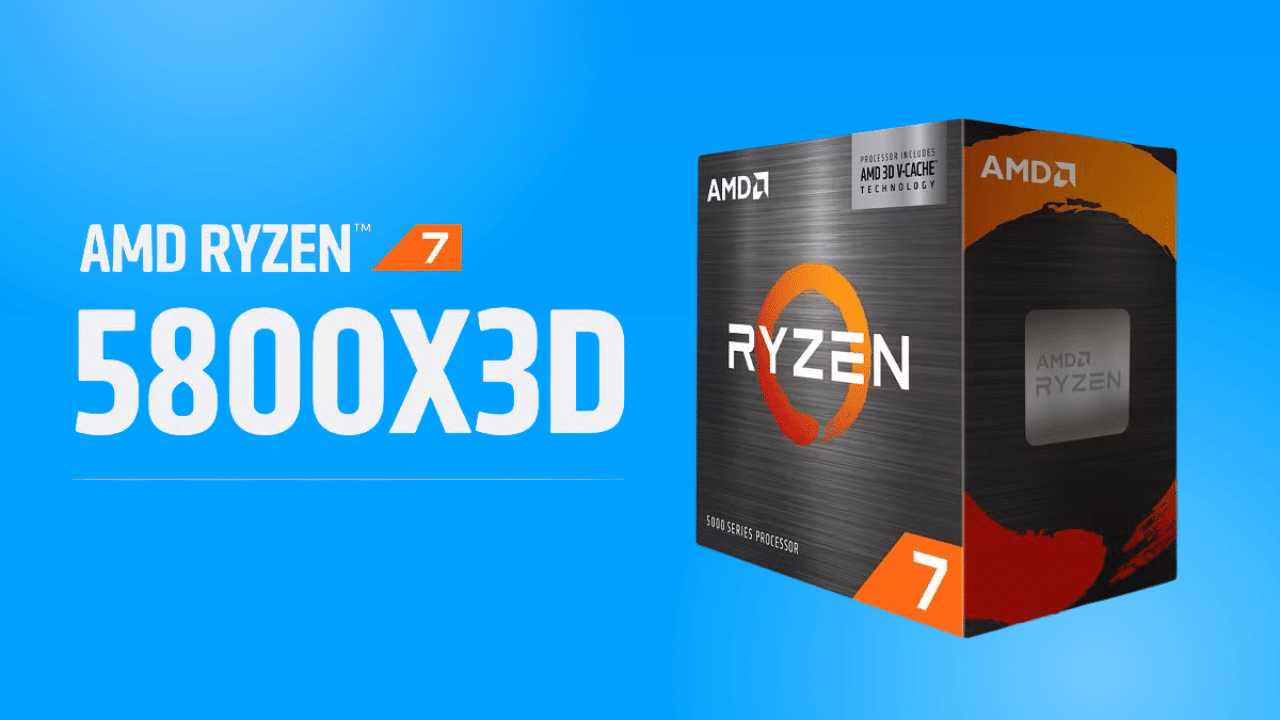
There’s no debate here—the Ryzen 7 5800X3D is hands-down the best AM4 CPU for gaming in 2025. Even though it doesn’t boast the highest clock speeds on paper (3.4GHz base and 4.5GHz boost), its game-changing feature is the 96MB of L3 cache, triple the size of the regular 5800X. This extra cache, enabled by AMD’s 3D V-Cache technology, translates into massive real-world gains in gaming performance.
In multiple benchmark tests, the 5800X3D outperforms or matches newer AM5 and Intel CPUs in gaming at 1080p and 1440p, especially in cache-sensitive games like:
Counter-Strike 2 – +15–20% higher average FPS vs. Ryzen 5700X
Call of Duty: Warzone – Lower 1% lows, smoother frame pacing
Elden Ring – More consistent FPS in open-world exploration
Hogwarts Legacy – Faster asset streaming and lower stutter rates
Starfield – Maintains higher minimum FPS in crowded scenes
Average FPS (2025 tests, paired with RTX 4070 Super at 1080p):
5800X3D: 190–250 FPS (depending on title)
5700X: 160–220 FPS
5600X: 150–210 FPS
1% lows on the 5800X3D are often 25–35% higher than competing AM4 chips, providing not just high FPS but more consistent gameplay with fewer frame drops.
| Specification | Details |
|---|---|
| Architecture | Zen 3 + 3D V-Cache |
| Cores / Threads | 8 Cores / 16 Threads |
| Base Clock | 3.4 GHz |
| Boost Clock | 4.5 GHz |
| L3 Cache | 96MB (3D V-Cache) |
| TDP | 105W |
| Socket | AM4 |
| PCIe Support | PCIe 4.0 |
| Memory Support | DDR4-3200 MHz |
| Cooler Included | ❌ No stock cooler |
| Release Date | April 2022 |
Incredible Gaming Performance – Still one of the fastest gaming CPUs on any platform, often outperforming newer AM5 and Intel CPUs in 1080p/1440p gaming.
Massive L3 Cache (96MB) – Minimizes latency and dramatically improves FPS in cache-sensitive titles.
Drop-in Upgrade for AM4 Users – Works on many existing B450, B550, X470, and X570 boards (with BIOS update).
Excellent Frame Pacing – Higher 1% lows for smoother gameplay.
Still Future-Proof for Gaming – Can handle modern GPUs like RTX 4070, RX 7800 XT without bottlenecks.
No Included Cooler – Requires aftermarket cooling; runs hot under load.
Not Ideal for Heavy Multitasking/Rendering – Lags behind CPUs like Ryzen 9 5900X or newer AM5 chips in multithreaded workloads.
Limited Overclocking – AMD locked the multiplier to preserve thermal limits due to 3D V-Cache.
High Power Consumption – Consumes more power than the 5600X or 5700X under load.
Expensive for AM4 – Price remains relatively high compared to other AM4 CPUs.
Although people usually discuss AM4 in the gaming world, the socket remains a strong choice for streaming and content creation in 2025. Whether you’re hitting record with OBS, cutting clips in Adobe Premiere Pro, or handling 4K edits on the timeline, AM4 CPUs—especially the six-core and eight-core models—give you the grunt you want, and they cost a lot less than the fresh AM5 or the latest Intel chips.
Due to AMD’s refined Zen 3 design, a well-chosen AM4 chip can handle live encoding, heavy multitasking, and full video rendering simultaneously without breaking a sweat. What follows is a list of the top AM4 processors for creators and streamers in 2025, accompanied by brief notes on each processor’s use cases, performance, specifications, and clear pros and cons.
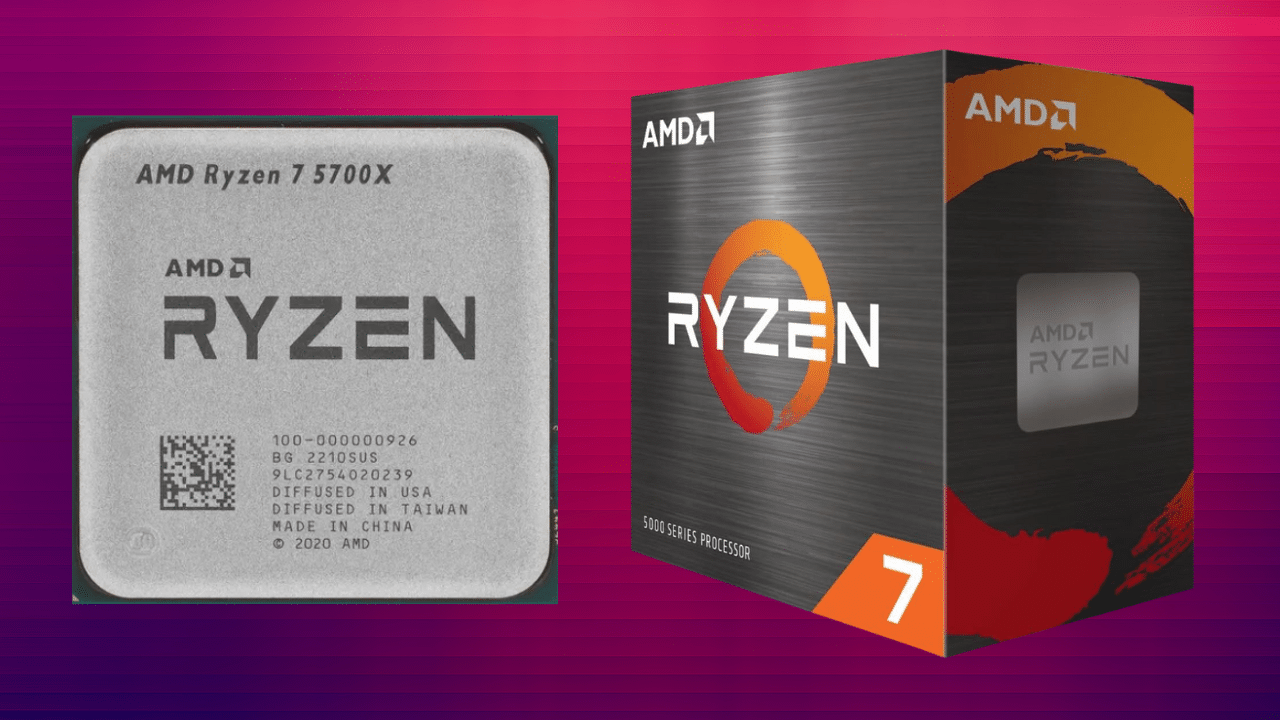
The Ryzen 7 5700X is one of the most balanced AM4 processors available. With 8 cores and 16 threads, it provides ample power for simultaneous streaming and gaming, as well as fast rendering in Adobe Premiere Pro, DaVinci Resolve, and Photoshop. Its 65W TDP makes it more power-efficient and cooler-running compared to the 5800X, making it ideal for long creative sessions or streaming marathons.
| Specification | Detail |
|---|---|
| Cores / Threads | 8 Cores / 16 Threads |
| Clock Speed | 3.4GHz / 4.6GHz Boost |
| L3 Cache | 32MB |
| TDP | 65W |
| PCIe Version | PCIe 4.0 |
| Memory Support | DDR4-3200 MHz |
| Integrated Graphics | ❌ No (requires GPU) |
| Cooler Included | ❌ None |
Great for OBS streaming with hardware or software encoding
Efficient for 1080p/1440p + webcam overlays and scene transitions
Smooth 4K editing performance for mid-sized video projects
Compatible with budget B550 boards
Lower heat output vs. 5800X or 5800X3D
No integrated graphics (needs GPU)
Slightly slower than 5800X in raw rendering speed
No stock cooler included
If you are building your first PC in 2025, you don’t need to fear the word entry-level anymore. AMD’s years of support for the AM4 socket mean that plenty of affordable processors are still available on store shelves, and they work great for everyday tasks, light gaming, and even some multitasking. Whether your new rig will serve homework, video calls, casual play, or the start of a streaming hobby, budget chips like the Ryzen 5 5600, 5500, and even the aging 3600 keep the system quick without emptying the wallet.
Each of these CPUs brings six cores and twelve threads to the table, allowing modern Windows, a dozen Chrome tabs, OBS, Zoom, and shooters like Fortnite, Valorant, or Apex Legends to run side by side with little fuss—all for far less money than the latest AM5 or fresh Intel sets.
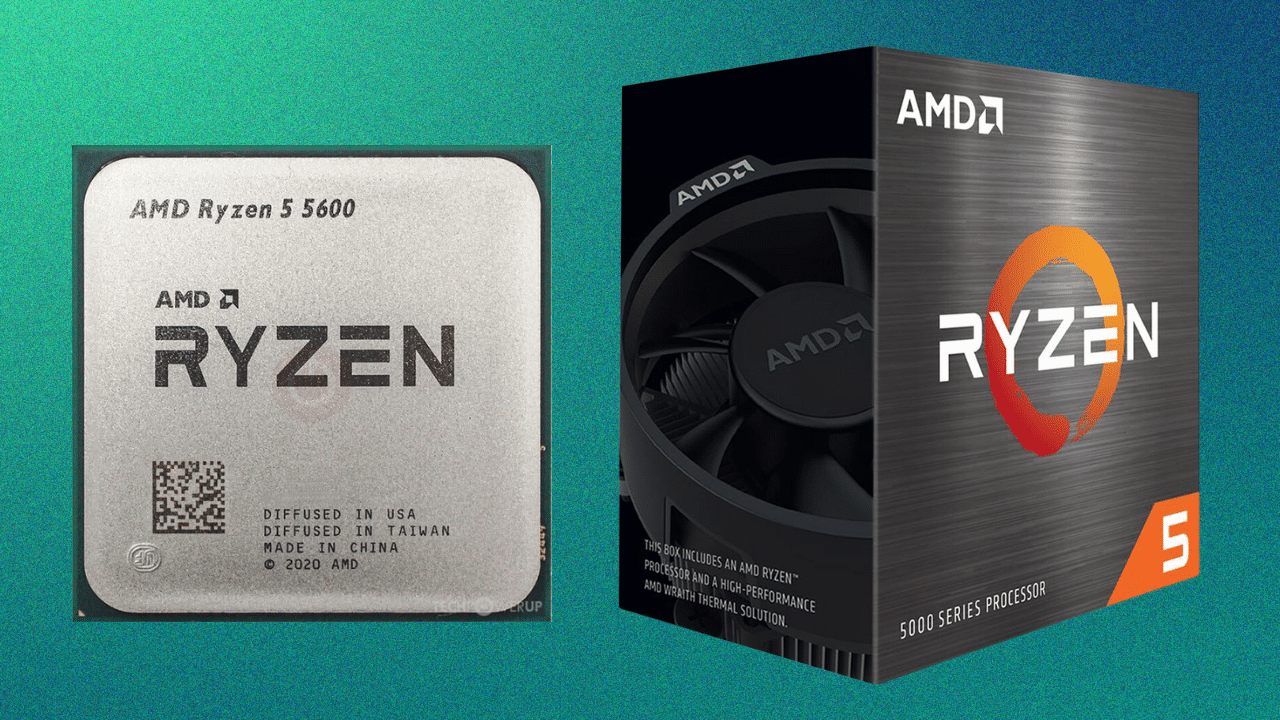
The Ryzen 5 5600 is arguably the most bang-for-your-buck processor available for AM4 today. With 6 cores and 12 threads and the same Zen 3 architecture as the 5600X, it offers nearly identical performance at a much lower cost. It supports PCIe 4.0, making it more future-proof than older chips, and it’s a plug-and-play upgrade for older B450/X470 motherboards with a BIOS update.
| Specification | Details |
|---|---|
| Cores / Threads | 6 Cores / 12 Threads |
| Base / Boost Clock | 3.5 GHz / 4.4 GHz |
| L3 Cache | 32MB |
| TDP | 65W |
| PCIe Support | PCIe 4.0 |
| Memory Support | DDR4-3200 MHz |
| Cooler Included | ✅ Wraith Stealth |
Great for 1080p gaming, school, and productivity
Nearly identical to 5600X in real-world usage
PCIe 4.0 and Zen 3 offer future-ready tech
Works well with cheap B450/B550 boards
Excellent price/performance ratio
Slightly lower boost than 5600X
No integrated graphics (requires a GPU)
Limited upgrade path (end of AM4 line)
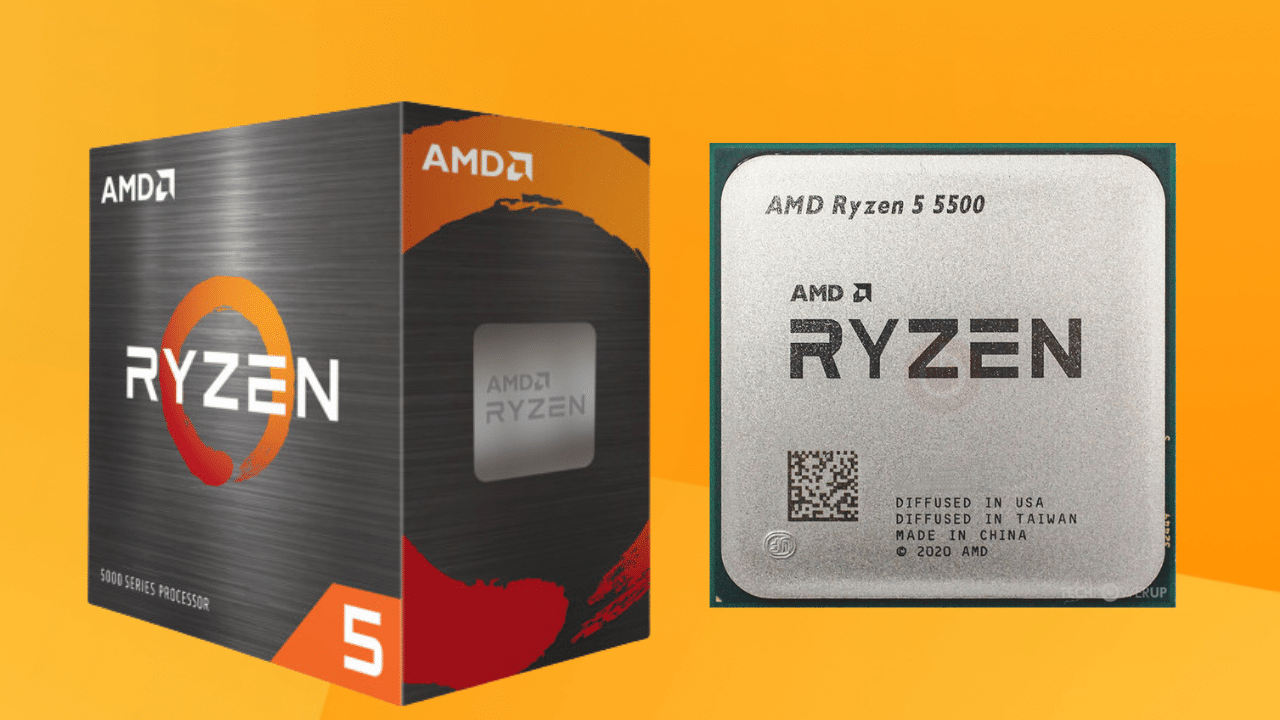
The Ryzen 5 5500 is the best CPU for ultra-budget gaming builds in 2025. While it uses the older Zen 2 architecture and only supports PCIe 3.0, it still delivers surprisingly strong performance for casual gamers and home users. For builds under $500, it’s hard to beat this chip’s value.
| Specification | Details |
|---|---|
| Cores / Threads | 6 Cores / 12 Threads |
| Base / Boost Clock | 3.6 GHz / 4.2 GHz |
| L3 Cache | 16MB |
| TDP | 65W |
| PCIe Support | PCIe 3.0 |
| Memory Support | DDR4-3200 MHz |
| Cooler Included | ✅ Wraith Stealth |
Best CPU under $100 in 2025
Smooth 1080p gaming in esports and older AAA games
Great for school, office, and light media editing
Cooler included; works out-of-the-box
Only 16MB L3 Cache (affects modern game performance)
Limited PCIe 3.0 bandwidth
Not ideal for high-end GPUs or future upgrades
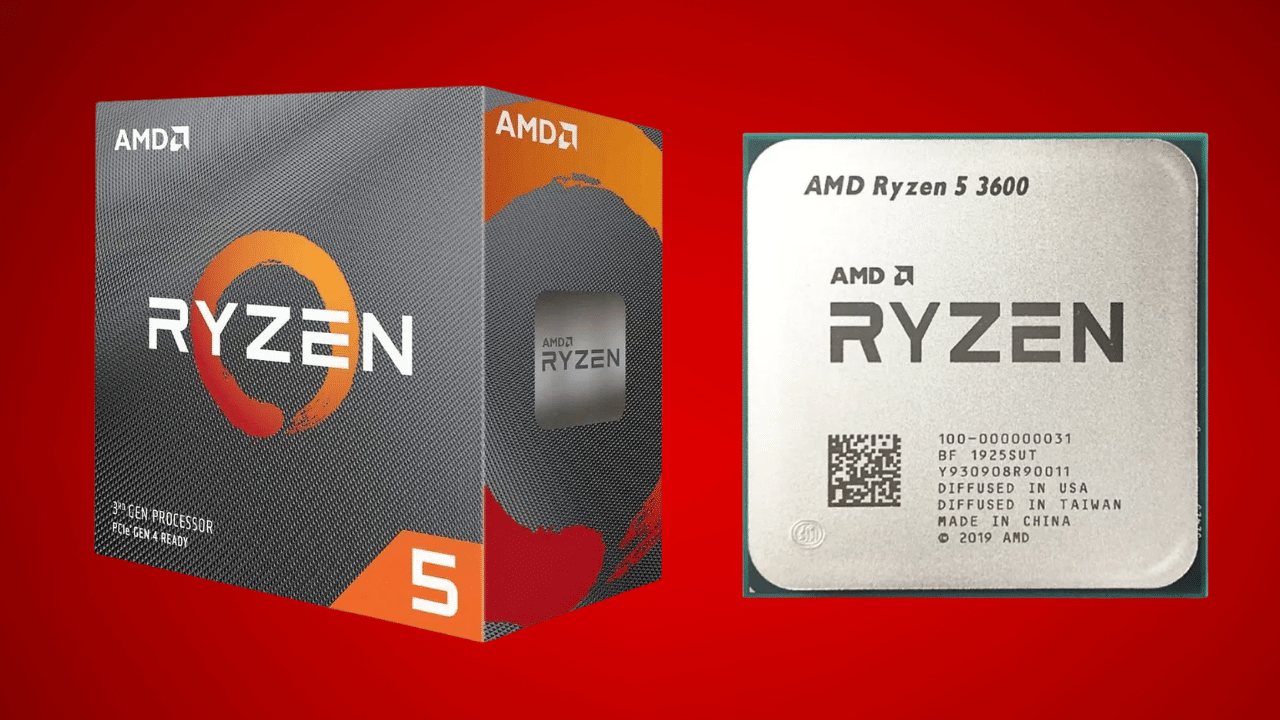
Despite launching in 2019, the Ryzen 5 3600 is still a viable option in 2025, especially on the used market. It uses Zen 2 architecture, supports PCIe 4.0, and is compatible with a wide range of AM4 motherboards. If you can find one at a good price (typically under $80 used), it’s still strong enough for light content creation, gaming, and general use.
| Specification | Details |
|---|---|
| Cores / Threads | 6 Cores / 12 Threads |
| Base / Boost Clock | 3.6 GHz / 4.2 GHz |
| L3 Cache | 32MB |
| TDP | 65W |
| PCIe Support | PCIe 4.0 |
| Memory Support | DDR4-3200 MHz |
| Cooler Included | ✅ Wraith Stealth |
Still handles modern workloads and games well
PCIe 4.0 support on B550/X570 boards
Strong multithreaded performance for the price
Often bundled with used AM4 boards
Less efficient than newer Zen 3 chips
Used units may lack warranty
No BIOS updates beyond Zen 2 on some boards
Choosing the best AM4 CPU in 2025 isn’t just about picking the one with the highest specs—it’s about matching the processor to your personal use case. Whether you’re a hardcore gamer, a streamer, a video editor, or someone building a PC for basic tasks, AM4 still offers several CPUs tailored to your specific needs. With options ranging from the ultra-powerful Ryzen 7 5800X3D to the budget-friendly Ryzen 5 5500, it’s critical to choose the right chip that balances performance and price based on how you use your PC.
Below is a breakdown of user types and the best AM4 CPU recommendations for each:
Target User: You play competitive shooters like CS2, Valorant, Fortnite, or graphically intense games like Cyberpunk 2077, Elden Ring, or Starfield. Your priority is FPS, low latency, and smooth frame pacing, especially at 1080p or 1440p resolutions.
Why: With 96MB of L3 cache, this CPU outperforms even some modern AM5 and Intel CPUs in gaming. It delivers extremely high 1% lows and eliminates frame stutters.
Pair it with: RTX 4070 / RX 7800 XT or higher
Ideal For: High refresh rate monitors (144Hz+), competitive esports, single-GPU setups
Nearly matches 5600X in FPS
Ideal for mid-range GPUs like RX 6700 XT, RTX 3060
Great for casual and entry-level gaming
Target User: You game and stream simultaneously using OBS, possibly with overlays, webcam input, and real-time encoding. You need smooth in-game performance without lagging your stream.
Why: 8 cores and 16 threads provide enough room to game and stream at once.
OBS x264 encoding, multiple Chrome tabs, Discord, and a game all run well together.
More efficient than the 5800X with similar gaming performance.
Ideal For: Mid-level streamers on Twitch, YouTube, Kick
Target User: You work with Adobe Premiere Pro, After Effects, DaVinci Resolve, or do Blender rendering. You may not game much, but you want multi-core power for smooth timelines and fast exports.
Why: 12 cores and 24 threads are perfect for rendering, batch encoding, and timelines with effects or multiple tracks.
Significantly faster than any 6-core option for productivity workloads.
Ideal For: Professional video editors, YouTubers, and digital artists
Better thermals than 5900X, good for lighter 4K projects and occasional rendering
Best for hobbyist creators with tight budgets
Target User: You use your PC for browsing, Zoom, MS Office, school assignments, or even light gaming. You don’t need extreme power, but you want it to be snappy and responsive.
Why: 6 cores, Zen 3 architecture, great efficiency
Smooth Chrome, streaming, and office apps without slowdown
Budget-friendly and compatible with cheap AM4 boards
Best for extremely low-budget builds
Can still handle modern workloads and casual games
Target User: You already have an older AM4 build (e.g., Ryzen 3 1200 or Ryzen 5 2600) and want a cost-effective CPU upgrade without changing your motherboard or RAM.
Why: BIOS updates on B450/X470 boards allow drop-in upgrades
Significant performance jump in gaming, multitasking, and responsiveness
Affordable path to modern performance
No AM4 build is complete without a reliable motherboard to match your processor. Whether you’re building a budget gaming rig with a Ryzen 5 5500 or a high-performance workstation powered by a Ryzen 9 5900X, choosing the right motherboard is essential for system stability, upgrade potential, and overall performance. Fortunately, in 2025, AM4 motherboards—especially B550 and X570 chipsets—offer wide compatibility, great value, and robust features that still rival newer platforms.
Here’s a detailed guide to the best AM4 motherboards to pair with top CPUs, categorized by budget, feature set, and intended use, along with specs, pros, and cons to help you decide.
The B550 chipset is perfect for most AM4 users. It supports PCIe 4.0 (for GPUs and NVMe SSDs), allows for overclocking, and is compatible with Zen 3 CPUs like the Ryzen 5 5600, 5600X, 5700X, and even the 5800X3D (with BIOS updates). These boards strike a great balance between affordability and performance.
| Feature | Detail |
|---|---|
| Form Factor | ATX |
| VRM Design | 12+2 Duet Rail Power System |
| Memory Support | 128GB DDR4 (up to 5100 MHz OC) |
| PCIe | PCIe 4.0 x16 + PCIe 3.0 x1 |
| M.2 Slots | 2x (1x PCIe 4.0) |
| USB Ports | USB 3.2 Gen2, Type-C |
| Networking | Intel Wi-Fi 6, 2.5Gb LAN |
Excellent VRMs for stable overclocking
Built-in Wi-Fi 6 and 2.5Gb LAN
Great for 5600X, 5700X, and even 5800X3D
Clean BIOS and strong thermal design
Slightly pricier than budget B550s
Limited RGB headers for enthusiasts
| Feature | Detail |
|---|---|
| Form Factor | Micro-ATX |
| VRM Design | 8-phase |
| Memory Support | 128GB DDR4 (up to 4733 MHz OC) |
| PCIe | PCIe 4.0 x16 + PCIe 3.0 x1 |
| M.2 Slots | 2x M.2 (1x PCIe 4.0) |
| USB Ports | USB 3.2 Gen1, Type-C |
Excellent value for under $100
Solid for Ryzen 5 5500, 5600, 5600X
Compact form factor for small builds
BIOS updates available through USB
Basic audio chipset
Limited heatsinks (may throttle under OC)
The X570 chipset is ideal for high-performance users, including gamers using the 5800X3D or content creators on the 5900X. It supports full PCIe 4.0, more USB connectivity, stronger VRMs, and better thermal management. X570 boards are still very relevant in 2025, especially for creators and power users.
| Feature | Detail |
|---|---|
| Form Factor | ATX |
| VRM Design | 12+2 DrMOS |
| Memory Support | 128GB DDR4 (up to 5100 MHz) |
| PCIe | Full PCIe 4.0 support |
| M.2 Slots | 2x PCIe 4.0 NVMe |
| USB Ports | USB 3.2 Gen2, Type-C |
| Networking | Intel Wi-Fi 5, Realtek LAN |
Rock-solid stability with Ryzen 7/9 CPUs
Great for 5800X3D, 5900X, and 4K content creation
Military-grade components & passive chipset cooling
BIOS Flashback and Q-LED support for easier troubleshooting
Fan on chipset (slightly noisy under load)
Larger ATX form factor—not for small cases
| Feature | Detail |
|---|---|
| Form Factor | ATX |
| VRM Design | 12+2 phase |
| Memory Support | DDR4 up to 5100 MHz OC |
| M.2 Slots | 2x NVMe |
| Expansion Slots | Full PCIe 4.0 lanes |
| Audio | ALC1200 high-def codec |
High-end features at mid-range price
Great for gaming + productivity builds
Strong VRMs for long render sessions or OC
No built-in Wi-Fi
BIOS is powerful but less beginner-friendly
If you’re getting into PC gaming, content creation, or general computing in 2025, you’re likely facing the classic dilemma: build your own PC or buy a prebuilt system? When it comes to the AM4 platform, this decision is more relevant than ever. While AM4 CPUs like the Ryzen 5 5600, Ryzen 7 5700X, and even Ryzen 7 5800X3D are still widely available, prebuilt systems featuring these CPUs are often competitively priced—sometimes even cheaper than building your own rig from scratch, thanks to bulk OEM discounts.
Let’s explore when it makes sense to build your own PC and when buying a prebuilt with an AM4 CPU is the smarter choice, along with a look at specs, pros, cons, and examples of current 2025 options.
Building your own PC offers full control over every component: from the case aesthetics and cooling to the exact power supply and GPU you want. It’s also a great way to learn how computers work, troubleshoot independently, and plan upgrades over time.
Full customization – Choose every part: RAM speed, SSD size, airflow layout, GPU brand, etc.
Upgrade-friendly – Easy to swap out components later (especially important with AM4 near its sunset).
Better cooling potential – You can choose larger CPU coolers or liquid cooling.
Educational – Great for learning PC assembly and troubleshooting skills.
Takes time – Sourcing parts, assembling, and cable management can take hours.
Initial setup stress – BIOS updates, drivers, and potential DOA parts can be frustrating for beginners.
Can be more expensive – Prebuilts sometimes include Windows licenses and discounted parts.
Prebuilt AM4 systems are a great option if you want plug-and-play convenience, or you’re buying a PC for someone else (like a student or office user). Many prebuilt PCs with Ryzen 5 and Ryzen 7 processors come well-optimized out of the box, often with a dedicated GPU like an RTX 3060 or RX 6700 XT and pre-installed Windows.
Quick and easy – No assembly or troubleshooting; just unbox, plug in, and go.
Windows pre-installed – Saves ~$100 on licensing.
OEM pricing benefits – Builders like HP often get CPU/GPU bundles at reduced prices.
Warranty coverage – System-wide warranties typically cover 1–3 years.
Less customization – Limited case options, cooling solutions, or PSU brands.
Cheap components – Some prebuilts use generic PSUs or RAM with no heatsinks.
Upgrade limitations – Some OEMs use proprietary connectors or motherboards.
Here are a few great AM4-based prebuilt options available in 2025 for different budgets:
Ryzen 5 5500 + GTX 1650 / RX 6400
16GB DDR4, 500GB SSD
Ideal for 1080p esports gaming and general use
Ryzen 5 5600 + RTX 3060 / RX 6700 XT
16GB DDR4, 1TB NVMe SSD
Great for 1080p ultra or 1440p high settings, streaming-ready
Ryzen 7 5700X or 5800X3D + RTX 4060 Ti / RX 7600 XT
32GB DDR4, 1TB SSD, better PSU and cooling
Perfect for gaming + content creation or serious multitasking
In 2025, the AM4 platform is still a strong and wallet-friendly choice for gamers and everyday users alike. If you want smooth, ultra-high frame rates, the Ryzen 7 5800X3D has you covered; for steady, multi-core power, the Ryzen 5 5600 does the job well. Because many motherboards fit the slot and upgrade options are plentiful, building or buying a new AM4 rig still makes good sense.
Ready to build your perfect AM4 PC?
Explore high-performance, professionally built systems at Sirius Power PC—where cutting-edge performance meets unbeatable value.